

Cardiovascular disease (CVD) remains the leading cause of deaths worldwide, despite billions of dollars spent on pharma each year. This is a catastrophe. Recently, studies have shed light on a novel cause of CVD – mold mycotoxins. These toxic compounds produced by molds have been implicated in a variety of health issues.
So, health problems like heart attacks, strokes, AFIB, POTS and cardiomyopathy MUST be understood in light of the mold (and bacteria) from water-damaged buildings.
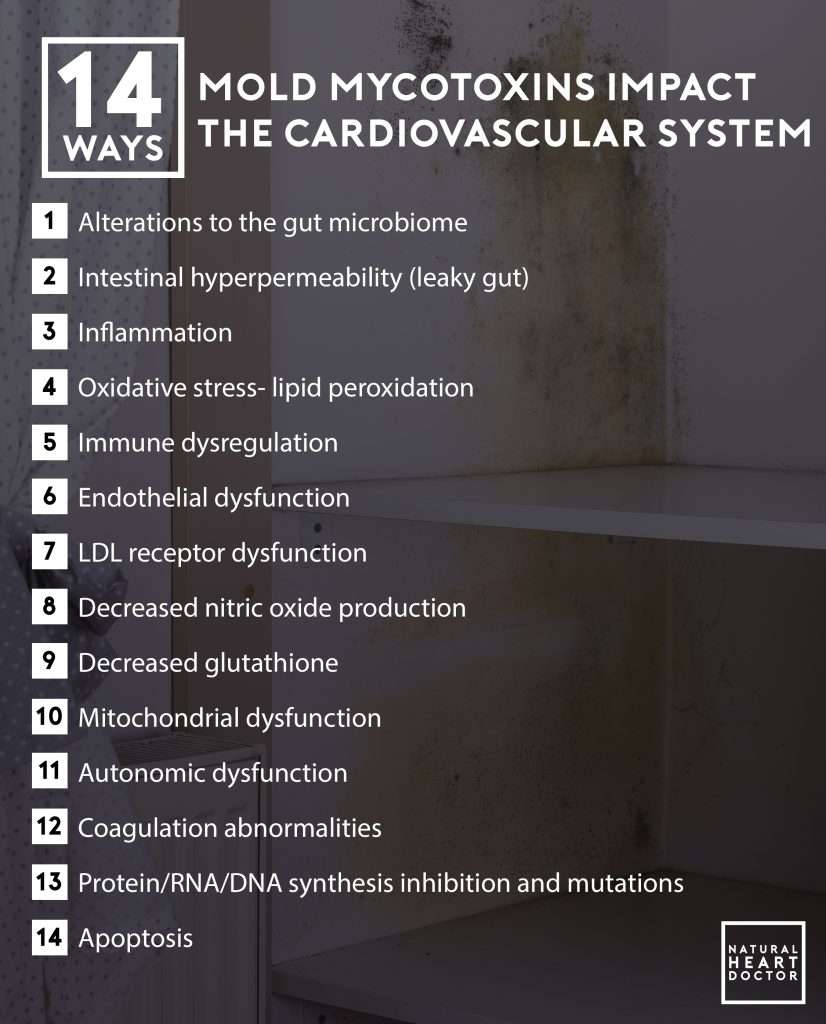
In this article, we look at 14 different ways that mold mycotoxins contribute to the development and progression of cardiovascular disease.
1) Alterations to the Gut Microbiome
First, the gut microbiome plays a crucial role in maintaining overall health, including cardiovascular health. Mold mycotoxins can disrupt the balance of the gut microbiota, leading to dysbiosis. Dysbiosis, in turn, has been associated with inflammation and metabolic disturbances, both of which are key factors in the development of cardiovascular disease.
2) Intestinal Hyperpermeability (Leaky Gut)
Mold mycotoxins have been shown to increase intestinal permeability, commonly referred to as “leaky gut.” A compromised gut barrier allows harmful substances, including toxins and pathogens, to enter the bloodstream, triggering an inflammatory response. This chronic inflammation is a known contributor to the development of cardiovascular diseases.
3) Decreased Glutathione Levels
Glutathione, a potent antioxidant, plays a crucial role in protecting cells from oxidative stress. Mold mycotoxins can deplete glutathione levels, leaving cells vulnerable to oxidative damage. This reduction in antioxidant capacity may contribute to the oxidative stress implicated in cardiovascular diseases.
4) Inflammation
Chronic inflammation is a well-established factor in cardiovascular disease. Mold mycotoxins can activate inflammatory pathways, leading to the production of pro-inflammatory cytokines. This sustained inflammatory response can contribute to the progression of atherosclerosis and other cardiovascular conditions.
5) Oxidative Stress and Lipid Peroxidation
Oxidative stress, resulting from an imbalance between reactive oxygen species (ROS) and antioxidants, is a hallmark of cardiovascular diseases. Mold mycotoxins can induce oxidative stress, leading to lipid peroxidation – a process that damages cell membranes and contributes to atherosclerosis.
6) Endothelial Dysfunction
The endothelium, the inner lining of blood vessels, plays a crucial role in maintaining vascular health. Mold mycotoxins have been implicated in endothelial dysfunction, impairing the production of nitric oxide and promoting vasoconstriction. Endothelial dysfunction is a key early event in the development of cardiovascular diseases.
7) LDL Receptor Dysfunction
Low-density lipoprotein (LDL) receptors are responsible for clearing cholesterol from the bloodstream. Mold mycotoxins can interfere with LDL receptor function, leading to elevated levels of LDL cholesterol. High LDL cholesterol is a well-known risk factor for atherosclerosis and cardiovascular diseases.
8) Apoptosis
Mold mycotoxins can induce apoptosis (cell death), in various cell types. Excessive apoptosis in cardiovascular tissues can contribute to the development of atherosclerosis, myocardial infarction, and other cardiovascular conditions.
9) Protein/RNA/DNA Synthesis Inhibition
Mold mycotoxins can interfere with cellular processes, including the synthesis of proteins, RNA, and DNA. These disruptions can lead to mutations and aberrant cell function, potentially contributing to the development of cardiovascular diseases.
10) Decreased Nitric Oxide Production
Nitric oxide (NO) is a key vasodilator and anti-inflammatory molecule produced by the endothelium. Mold mycotoxins have been shown to decrease NO production, leading to impaired vascular function and promoting the development of cardiovascular diseases.
11) Immune-Dysregulation
The immune system plays a crucial role in maintaining cardiovascular health. Mold mycotoxins can damage the immune response, leading to chronic inflammation, thus contributing to the pathogenesis of cardiovascular diseases.
12) Mitochondrial Dysfunction
Mitochondria, the energy-producing organelles within cells, link their dysfunction to various diseases, including cardiovascular conditions.Mold mycotoxins can disrupt mitochondrial function, potentially contributing to energy imbalance and cellular damage in cardiovascular tissues.
13) Autonomic Dysfunction
The autonomic nervous system regulates heart rate, blood pressure, and other cardiovascular functions. Mold mycotoxins may disrupt autonomic function, leading to imbalances that can contribute to the development of cardiovascular diseases.
14) Coagulation Abnormalities
Associations between mold mycotoxins and alterations in the coagulation cascade have led to increased blood clotting. Obviously, excessive blood clotting is a risk factor for thrombotic events, such as heart attacks and strokes, contributing to the overall burden of cardiovascular diseases.
Next Steps
You need to know if a water damaged building is exposing you to mold and bacteria. PLEASE do not assume that you are safe. Just test yourself and your home.
Here are the next two steps:
- Urine mycotoxin testing: Are there mold mycotoxins in your urine? So, if they are coming IN your body, if they are coming out of your body. – Buy the urine mycotoxin test here.
- #8 swiffer test: A very comprehensive, do-it-yourself test for mold AND bacteria in your home. We recommend EVERYONE test their home with this. – Buy the swiffer test here.
These tests include a free review call to go over the results.
Finally, please check for mold soon. The health of you, your family, and your pets depends on knowing this information.


