
Why LDL Is Life Giving, Protective, and Present in Every Animal on Earth
For decades, LDL has been portrayed as the villain of cardiovascular health. You have been told it clogs arteries, causes heart attacks, and must be lowered at all costs. But this simplistic story ignores one inconvenient truth.
LDL is not a mistake of nature.
LDL is not a toxin.
LDL is not the enemy.
LDL is part of your immune system.
And that is exactly why every animal on Earth has it.
LDL is an ancient survival molecule
Long before modern humans existed, long before pharmaceuticals, long before processed food, life had one overriding priority: survival. Every mammal, bird, reptile, and fish has lipoproteins like LDL because they serve essential functions.
LDL exists because it helps keep organisms alive.
LDL transports more than cholesterol
Yes, LDL transports cholesterol. But cholesterol itself is foundational to life. It is required for cell membranes, hormone production, bile acids, vitamin D, and brain function.
Beyond cholesterol, LDL acts as a transport vehicle for fat soluble nutrients and bioactive molecules that are essential for repair, resilience, and immune defense.
This is not accidental biology. It is intentional design.
LDL binds and neutralizes bacterial toxins
One of LDL’s most important and least discussed roles is immune defense against bacteria.
Certain bacteria, especially gram negative organisms, release endotoxins called lipopolysaccharides. These endotoxins can trigger massive inflammatory responses and play a role in sepsis, vascular inflammation, and chronic disease.
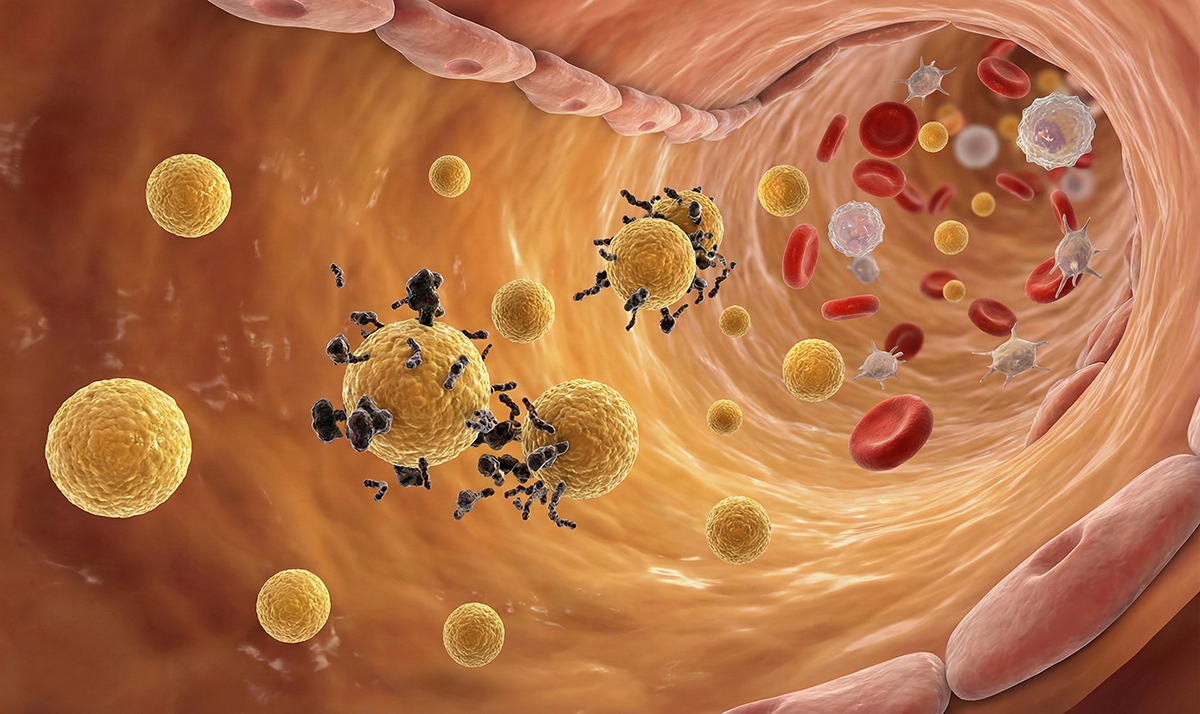
LDL particles can bind these endotoxins in the bloodstream.
By binding bacterial toxins, LDL helps neutralize them and shuttle them to the liver for clearance. In effect, LDL acts like a circulating sponge, soaking up dangerous microbial debris before it can cause widespread damage.
This is not theory. This is well documented in the medical literature.
LDL is part of innate immunity
Innate immunity is your body’s first line of defense. It works quickly, nonspecifically, and continuously.
LDL operates within this system by interacting with bacterial products, modulating inflammatory signaling, and assisting with detoxification through hepatic clearance pathways.
In acute illness and infection, LDL often drops. This is not because LDL is harmful. It is because LDL is being consumed, redistributed, or downregulated during stress and inflammation.
Low LDL is often a marker of illness, not health.
LDL helps regulate inflammatory balance
Inflammation is not inherently bad. It is a survival response.
LDL and its associated proteins help regulate immune signaling, preventing excessive activation while still allowing effective defense. When LDL becomes damaged or oxidized, it can signal danger and attract immune cells to areas of injury.
That does not mean LDL is the problem. It means damage, oxidative stress, toxins, and metabolic dysfunction are the problem. (test for damaged LDL with this test)
Blaming LDL for inflammation is like blaming firefighters for the fire.
Why all animals have LDL
Every animal with a circulatory system has lipoproteins similar to LDL.
Animals that never eat sugar have LDL.
Animals that never eat seed oils have LDL.
Animals that never develop heart attacks still have LDL.
That alone should force us to question the narrative.
If LDL were inherently harmful, evolution would have eliminated it. Instead, it preserved it across species because it supports immunity, repair, and survival.
The real question we should be asking
The question is not “How low can we push LDL?”
The real questions are:
Why is LDL becoming damaged?
Why is the immune system chronically activated?
Why is oxidative stress high?
Why is the vascular lining injured?
Why is the body responding with inflammation?
LDL shows up in the story because it is doing its job.
When the environment is toxic, food is inflammatory, sleep is poor, stress is high, and nutrient intake is inadequate, LDL becomes a witness to damage, not the cause of it.
Embrace LDL’s life giving role
LDL is not something to fear. It is something to understand.
It is a transport particle.
It is an immune defense molecule.
It is part of detoxification.
It is part of repair.
It is part of life.
Suppressing LDL without addressing root causes does not restore health. It masks symptoms while ignoring the biology that kept humans alive long before modern medicine existed.
If your body still makes LDL, it is because you still need it.
And that is something worth respecting.
OptiLipid
To support optimal LDL levels, lower inflammation and ox stress, along with better blood sugar, we created OptiLipid. Learn more at OptiLipid.com
Selected medical literature references
Feingold KR, Grunfeld C. Lipoproteins and host defense against infection. Endotext.
Vreugdenhil AC et al. Lipopolysaccharide binding to lipoproteins and its role in neutralization of endotoxin.
Walley KR et al. The role of lipoproteins and PCSK9 in sepsis and immune defense.
Leung A et al. LDL receptor dependent clearance of bacterial lipids.
Feng Q et al. Low LDL cholesterol and risk of sepsis and infection outcomes.
Tall AR, Yvan Charvet L. Cholesterol, inflammation, and innate immunity.


