
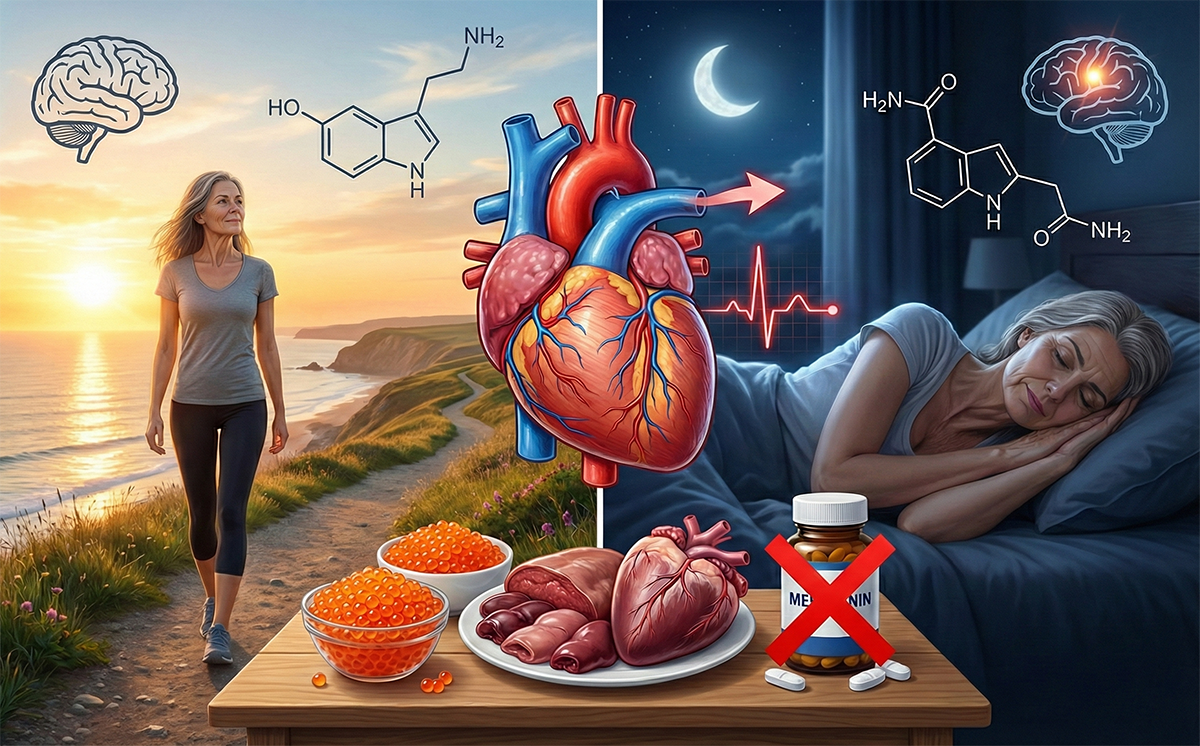
When most people hear the word melatonin, they think of a pill taken at bedtime. But melatonin is not meant to come from a supplement. It is a hormone your body is designed to produce naturally every night when your biology is properly aligned with light, darkness, and time. What many people do not realize is that melatonin plays a critical role in cardiovascular health, not just sleep.
Melatonin is a cardiovascular protection hormone, not just a sleep hormone.
At night, melatonin helps blood vessels relax, allowing blood pressure to fall and the heart rate to slow. This nighttime drop in blood pressure is one of the strongest predictors of long term heart health. Melatonin also reduces oxidative stress within blood vessels, calms inflammation, stabilizes plaque, and supports healthy endothelial function. When melatonin production is impaired, the heart never fully rests. Blood pressure stays higher overnight, inflammation remains active, and vascular repair is incomplete. Over time, this accelerates cardiovascular aging.
Melatonin production does not begin at night. It begins during the day.
The signal to release melatonin later that evening is set by exposure to natural sunlight, especially in the morning and early afternoon. Specialized light sensing cells in the eyes detect sunlight and communicate with the brain’s master circadian clock. This clock governs the timing of hormone release throughout the body. If the brain does not clearly register daytime, it cannot properly initiate nighttime melatonin production. This is why people who spend most of their days indoors often struggle to fall asleep or stay asleep, even when they are exhausted.
Sunlight creates serotonin, which is later converted into melatonin.
Melatonin is synthesized from serotonin. Daytime sunlight exposure increases serotonin production in the brain, providing the raw material needed to make melatonin after dark. When sunlight exposure is insufficient, serotonin levels fall and nighttime melatonin production is blunted. This upstream problem is why taking melatonin supplements often feels inconsistent or ineffective. The body is missing the foundational signal required to produce melatonin naturally.
Bright days create strong nights.
Healthy sleep depends on contrast. Bright daytime light followed by true darkness at night produces a strong melatonin rhythm. Dim days combined with artificial light at night flatten that rhythm. People who regularly get outdoor sunlight during the day produce higher nighttime melatonin peaks and experience deeper, more restorative sleep. This directly supports nighttime blood pressure reduction, vascular repair, and heart recovery.
Melatonin supplements bypass the system rather than fixing it.
Taking melatonin does not correct circadian misalignment, reduce oxidative stress, or repair mitochondrial dysfunction. What actually restores healthy melatonin production is supporting the body’s biology. That means adequate daytime sunlight, proper nutrient availability, and minimizing toxins that disrupt hormone signaling.
Certain nutrients are required for natural melatonin production and nighttime repair.
The conversion of serotonin to melatonin, along with mitochondrial energy production and cellular repair, depends on specific vitamins, minerals, amino acids, and fats. Whole food based nutrition provides these nutrients in their most bioavailable forms. This is where Kickstart My Heart and Wild Salmon Roe fit into the biology.
Kickstart My Heart is made from 100 percent free range, pasture raised, unvaccinated, field harvested New Zealand elk organs. Organ meats naturally contain B vitamins, minerals, amino acids, and critical cofactors that support neurotransmitter balance, hormone production, and cellular energy. These nutrients help the body maintain the biochemical pathways required for healthy melatonin production.
Wild Salmon Roe provides essential fatty acids, phospholipids, choline, and fat soluble nutrients that support brain signaling, mitochondrial health, and anti inflammatory pathways. These systems are especially active during deep sleep, when repair and regeneration occur.
These products are not sleep aids. They are foundational nutrition that allows the body to do what it was designed to do when darkness falls.
Toxin avoidance is essential for melatonin and heart health.
Melatonin is highly sensitive to environmental disruption. Artificial light at night suppresses melatonin release. Plastics, pesticides, heavy metals, and endocrine disrupting chemicals interfere with hormone signaling and pineal gland function. Late night screen exposure confuses the brain into thinking it is still daytime. Avoiding toxins, dimming lights after sunset, and reducing nighttime screen exposure are just as important as sunlight and nutrition.
The heart health takeaway is simple but profound.
Melatonin is not a pill problem. It is a circadian biology problem. When sunlight exposure is restored during the day, darkness is respected at night, nutrient dense foods and supplements are prioritized, and toxins are minimized, melatonin production returns naturally. Sleep deepens. Blood pressure lowers. Inflammation quiets. The heart finally gets the rest it needs.
Not from a pill.
From biology done right.


