

For most of human history, sunset meant something. The sky grew dark, the fire burned low, and the body received a clear message: the active part of the day was ending.
Today, sunset often means nothing. We sit beneath bright LED lights, stare into phones and televisions, answer emails late into the evening, and carry artificial daylight into the bedroom. Then we wonder why we cannot fall asleep, why we wake up exhausted, and why our blood pressure, blood sugar, heart rhythm, and metabolism seem increasingly difficult to control.
A major new study suggests that artificial light at night may be doing more than disturbing sleep. It may be associated with measurable changes in the structure and function of the heart.
The message is simple: your heart needs bright days, dark nights, and a consistent rhythm. Going to bed earlier and reducing technology after dark may be among the easiest heart-health upgrades you can make.
What Did the New Study Find?
The study, published in the European Heart Journal, included 11,071 participants who wore a wrist device containing a light sensor for seven days. Approximately three years later, researchers evaluated their hearts using cardiac magnetic resonance imaging.
The researchers compared people exposed to more than three lux of light at night with people exposed to almost no nighttime light. Three lux is not a brightly illuminated room. It is a low level of light, which makes the results even more relevant to bedrooms filled with streetlight, televisions, night-lights, alarm clocks, chargers, and glowing electronic devices.
Compared with people who had dark nights, those with high nighttime light exposure had:
- 2.4% greater left ventricular mass indexed to height
- 1.5% greater average left ventricular wall thickness
- 1.9% lower myocardial contraction fraction
- Less favorable measures of heart-muscle strain
- Enlargement and functional changes involving the right ventricle and left atrium
These were subtle, subclinical differences, not a diagnosis of heart failure in every exposed person. But they followed a linear dose-response pattern: as nighttime light exposure increased, cardiac measurements generally became less favorable.
The researchers also followed a much larger group of 73,286 participants for eight to ten years. Compared with people reporting essentially dark nights, those with high nighttime light exposure had an associated:
- 29% higher relative risk of heart failure
- 24% higher relative risk of heart attack
- 33% higher relative risk of stroke
- 15% higher relative risk of atrial fibrillation
- 26% higher relative risk of cardiovascular death
These are relative associations, not proof of cause and effect. People exposed to more nighttime light may differ in other important ways, including work schedules, neighborhood noise, stress, activity, and sleep habits. Light was measured at the wrist for only seven days, not directly at the eye, and the sensor did not determine the wavelength or color of the light.
Nevertheless, this was a large study using objective light measurements and detailed cardiac imaging. The signal deserves attention, especially because reducing artificial light at night costs little and supports normal human biology.

Why Would Light at Night Affect the Heart?
Light is not simply something that allows you to see. It is biological information.
Specialized cells in the retina detect environmental light and send signals to the suprachiasmatic nucleus, or SCN, in the brain. The SCN is the master clock that helps coordinate daily rhythms in sleep, hormones, body temperature, blood pressure, metabolism, and autonomic nervous system activity.
Bright light during the day, especially outdoor morning light, helps strengthen the amplitude and timing of this clock. Darkness at night tells the body that the day is over. Artificial light after sunset can blur that distinction.
Nighttime light, particularly shorter-wavelength blue-enriched light, can suppress or delay melatonin and shift circadian timing. This may delay sleep, shorten total sleep time, fragment sleep, and keep the body in a more alert state when it should be repairing. I have written before about melatonin as circadian biology rather than a pill.
That matters to the cardiovascular system. Healthy nighttime physiology normally includes a drop in blood pressure, lower sympathetic nervous system activity, changes in heart rate, and coordinated metabolic and hormonal repair. When the brain continues receiving a daytime light signal at night, these restorative rhythms may be weakened.
In the new study, shorter sleep statistically explained an estimated 24% to 49% of the associations between nighttime light and the cardiac findings. That does not mean sleep was the only mechanism. Circadian disruption may also influence cortisol timing, sympathetic tone, glucose control, inflammation, oxidative stress, endothelial function, and blood pressure.
Your heart is rhythmic. Heart rate, blood pressure, vascular tone, platelet activity, hormones, and metabolism all change across the 24-hour day. Circadian disruption is therefore not merely a sleep problem. It is a whole-body timing problem.
Why Going to Bed Earlier Matters
“Get eight hours” is incomplete advice. Timing matters too.
Eight hours from midnight to 8 a.m. may not be biologically identical to eight hours that begins several hours earlier. Human physiology is synchronized to the natural light-dark cycle. Staying awake beneath artificial light deep into the night creates a mismatch between what the environment is signaling and what the body is designed to do. The risks of late bedtimes are not only about hours logged.
Going to bed earlier usually accomplishes several things at once. It reduces exposure to artificial light, limits late-night eating, creates more opportunity for adequate sleep, and better aligns behavior with the natural nighttime rise in sleepiness.
You do not need a perfect bedtime prescribed by a wearable. Start by paying attention to sunset. Dim your environment as the sun goes down, allow evening to feel different from daytime, and aim to be asleep well before midnight. I personally favor a much earlier schedule whenever life allows.
Technology After Dark Is Working Against You
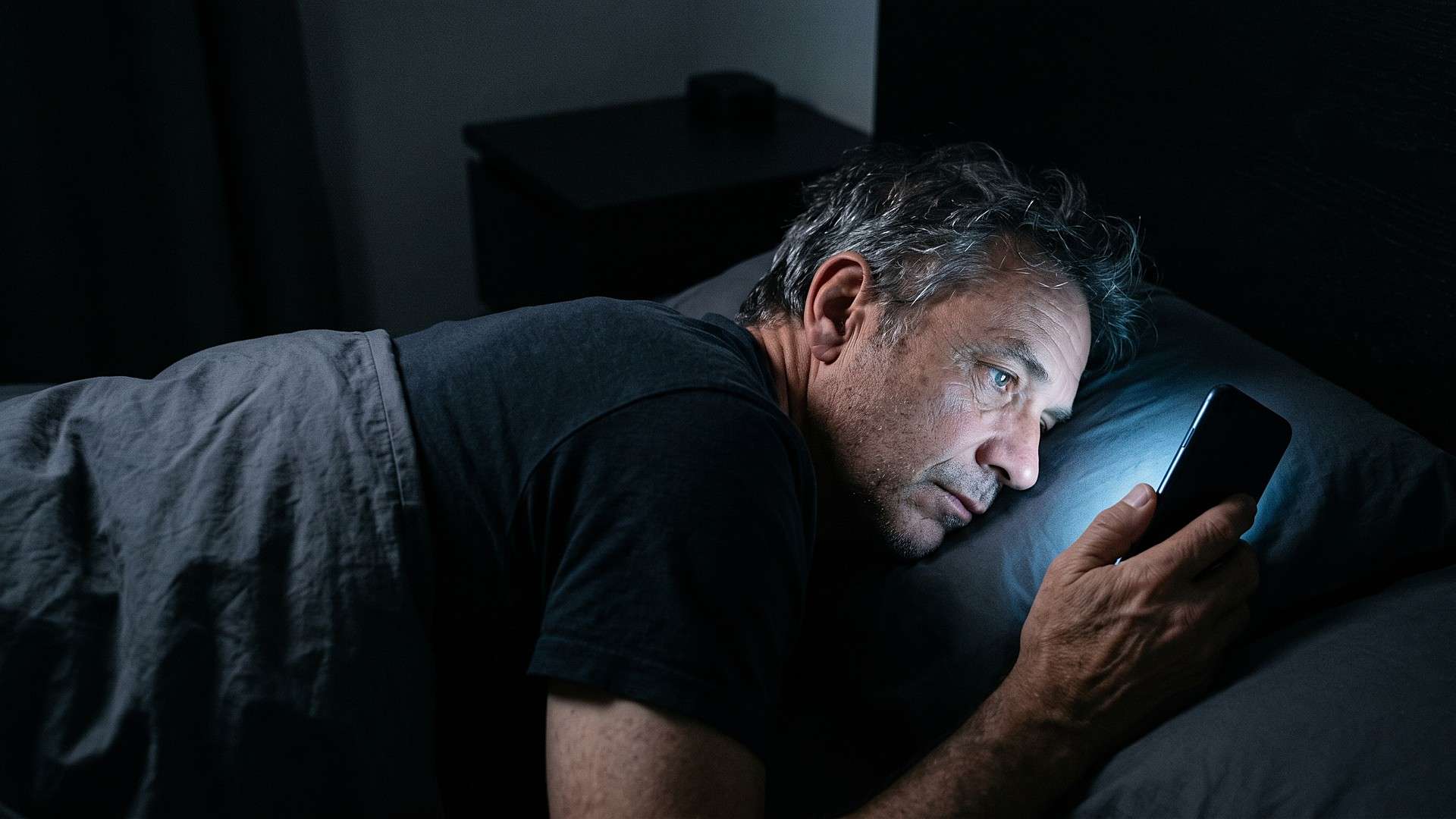
Phones, tablets, computers, and televisions create a double problem. They expose the eyes to light, and their content keeps the brain stimulated. Work messages, social media, news, video, and endless scrolling tell the nervous system to remain engaged. I covered this ground in the hidden dangers of blue light.
The best strategy is simple: do not use technology after dark whenever possible.
That will not be practical every night for every person. If you must use a device, reduce the biological disruption:
- Activate the strongest red or warm-color filter at sunset.
- Reduce screen brightness as low as comfortably possible.
- Enable dark mode where available.
- Keep the screen farther from your face.
- Avoid overhead LED lighting while using the device.
- Finish screens at least one to two hours before bed when possible.
A red filter is a harm-reduction tool, not a permission slip for unlimited nighttime scrolling. Color matters, but brightness, duration, timing, distance from the eyes, and mental stimulation matter too.
Should You Wear Blue-Blocking Glasses?
If you will be exposed to artificial light after dark, blue-blocking glasses can be a practical extra layer of protection. Look for orange, amber, or red lenses intended for evening use. Clear lenses marketed as blue blockers often remove only a modest portion of the wavelengths that influence circadian signaling.
Wear the glasses from sunset until bedtime when artificial lighting or screens cannot be avoided. But remember the hierarchy: turning unnecessary lights and devices off is better than trying to filter your way out of an overly bright environment.
Clinical research on blue-blocking glasses and sleep is mixed and depends heavily on the lenses, timing, population, and outcome measured. They should therefore be viewed as a useful tool, not a substitute for darkness or a guaranteed treatment for insomnia or cardiovascular disease.
Click HERE for our recommended blue-blocker glass brand.
Build a Heart-Healthy Light Environment
During the day, get outside. Seek morning sunlight soon after waking and spend time outdoors throughout the day. Indoor illumination is typically a poor substitute for the intensity and changing wavelengths of natural light.
After sunset, reverse the signal:
- Turn off bright overhead lights.
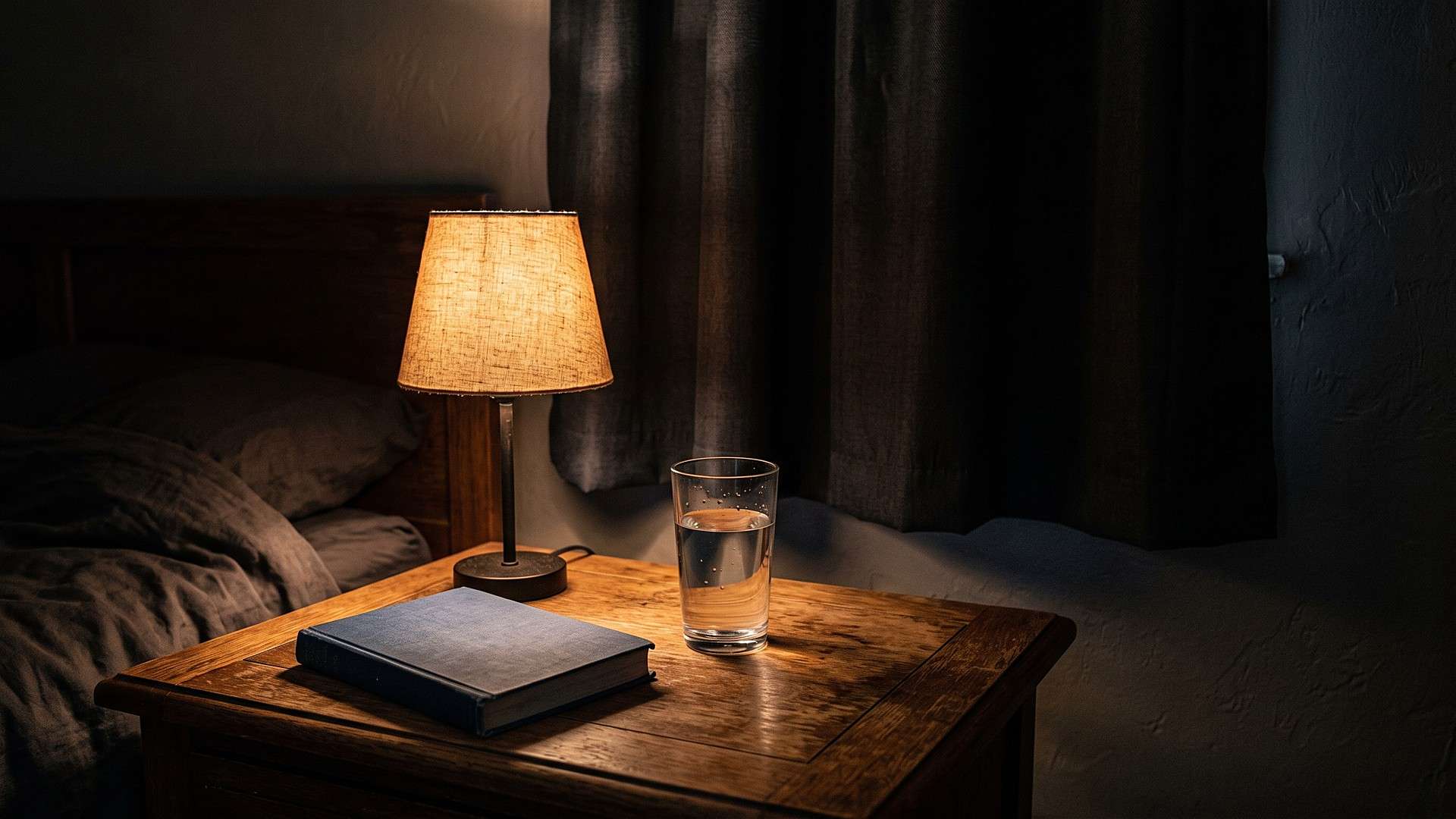
- Use dim, warm amber or red lamps positioned low in the room.
- Stop unnecessary screen use.
- Put phones and tablets on their strongest red-shifted setting.
- Wear amber or red blue-blocking glasses if exposure is unavoidable.
- Use blackout curtains or a comfortable eye mask.
- Cover or remove LEDs from chargers, televisions, clocks, smoke detectors, and other electronics where it is safe to do so.
- Keep the bedroom cool, quiet, dark, and free of televisions.
- Move bedtime earlier instead of fighting fatigue with more light and stimulation.
- Keep wake time consistent and begin the next day with outdoor light.
If you need light for nighttime safety, use the dimmest practical amber or red light close to floor level. Preventing a fall matters. The goal is not perfection; it is to stop bathing the eyes and bedroom in unnecessary light.
Darkness Is Not Empty, It Is a Biological Signal
Modern medicine spends enormous energy treating the downstream consequences of disrupted biology: high blood pressure, insulin resistance, atrial fibrillation, obesity, and heart failure. But we rarely ask whether the body is receiving the basic environmental signals it expects.
At Natural Heart Doctor, we look upstream. Too much of the wrong input and not enough of the right input can drive dysfunction. Artificial light at night is another modern input that our ancestors did not experience. Morning sunlight, active days, darkness after sunset, and adequate sleep are part of the “good stuff” the heart needs.
The new study does not prove that turning off your phone will stop a heart attack or reverse cardiac remodeling. No responsible interpretation should make that claim. It does show that greater nighttime light exposure is associated with subtle adverse changes throughout the heart and with higher subsequent cardiovascular risk.
You cannot control every streetlight, work schedule, or demand of modern life. You can control much of your home environment.
Tonight, turn down the lights. Put the phone away. Let darkness arrive. Go to bed earlier.
Your heart does some of its most important work when you finally stop asking it to live in daytime around the clock.
Want a plan built around your own numbers instead of a guess? Schedule a discovery call with our team.
Frequently Asked Questions
The study compared people exposed to more than three lux at night with people exposed to almost no nighttime light. Three lux is not a brightly lit room; it is a low level of light, which makes the findings relevant to ordinary bedrooms filled with streetlight, televisions, night-lights, alarm clocks, chargers, and glowing electronics.
The study found associations, not proof of cause and effect. People exposed to more nighttime light may also differ in work schedules, noise, stress, activity, and sleep habits, and light was measured at the wrist rather than at the eye. What it does show is that greater nighttime light exposure is associated with subtle adverse changes in heart structure and with higher subsequent cardiovascular risk.
Timing matters alongside duration. Eight hours beginning at midnight may not be biologically identical to eight hours beginning several hours earlier, because human physiology is synchronized to the natural light-dark cycle. Going to bed earlier also reduces artificial light exposure, limits late-night eating, and aligns with the natural nighttime rise in sleepiness.
They can be a practical extra layer when artificial light after dark is unavoidable. Look for orange, amber, or red lenses intended for evening use, since clear lenses marketed as blue blockers often remove only a modest portion of the relevant wavelengths. Clinical research is mixed and depends on the lenses, timing, and population, so treat them as a tool rather than a substitute for darkness.
Turn off bright overhead lights after sunset and use dim amber or red lamps low in the room. Put phones and tablets on their strongest red-shifted setting or stop using them. Use blackout curtains or an eye mask, cover or remove LEDs on chargers, televisions, clocks, and smoke detectors where it is safe to do so, and keep the bedroom cool, quiet, and free of televisions.
References
- Dai J, et al. Nighttime light exposure and cardiac structure and function. European Heart Journal. 2026. doi:10.1093/eurheartj/ehag563
- European Society of Cardiology. Too much light at night changes the shape and working of the heart. September 10, 2026.
This article is for educational purposes and is not personal medical advice. Persistent insomnia, severe daytime sleepiness, loud snoring, witnessed pauses in breathing, nighttime chest pain, or recurrent palpitations deserve individualized evaluation.
Dr. Jack Wolfson DO, Cardiologist and Founder of Natural Heart Doctor


